Bulk measurement
Two rings track changes in fluid composition along the line.
Compare wire probes, ring electrodes and wall arrays by how they mount and which part of the flow they measure.
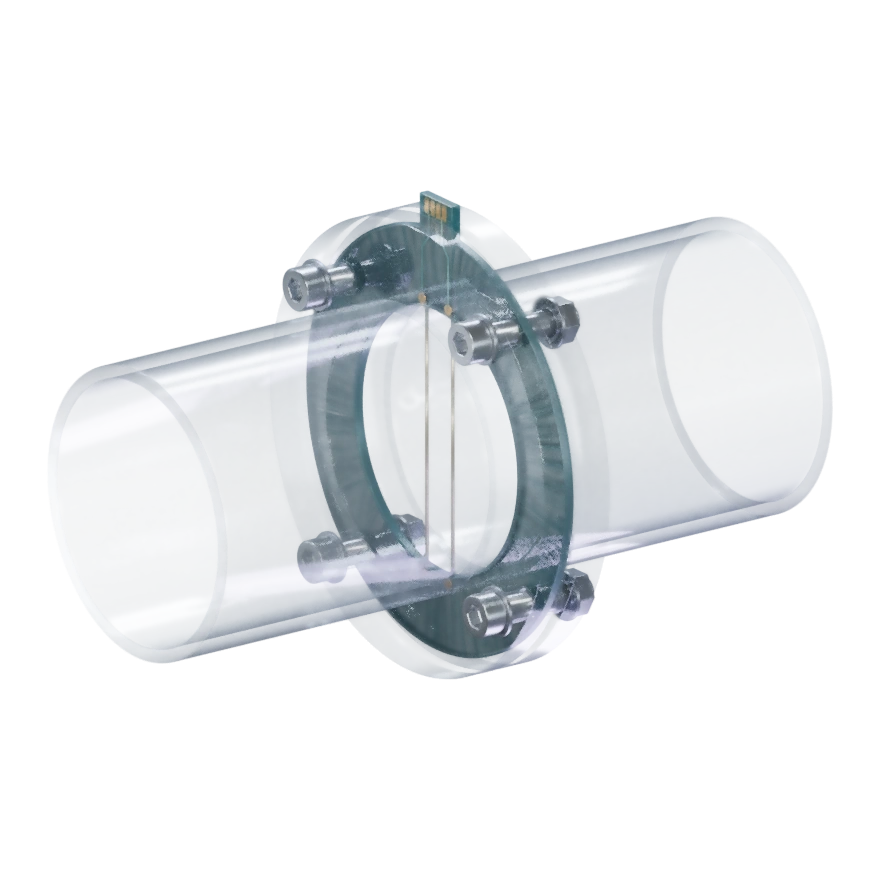
Two rings track changes in fluid composition along the line.
Two parallel wires span the pipe bore. One excites the fluid and the other collects the current between them.
Ten electrodes around the inner wall reveal where a film, deposit or different fluid changes the near-wall response.
A needle enters perpendicular to the pipe axis. Its two exposed tips register passing gas–liquid interfaces.
Interleaved electrode fingers follow the curvature of the pipe wall and sense the material touching it.
A straight sensing rod spans the bore of a metal spool. The surrounding pipe is the reference electrode.
Images illustrate design geometries. Materials, dimensions and calibration are specified for each application.
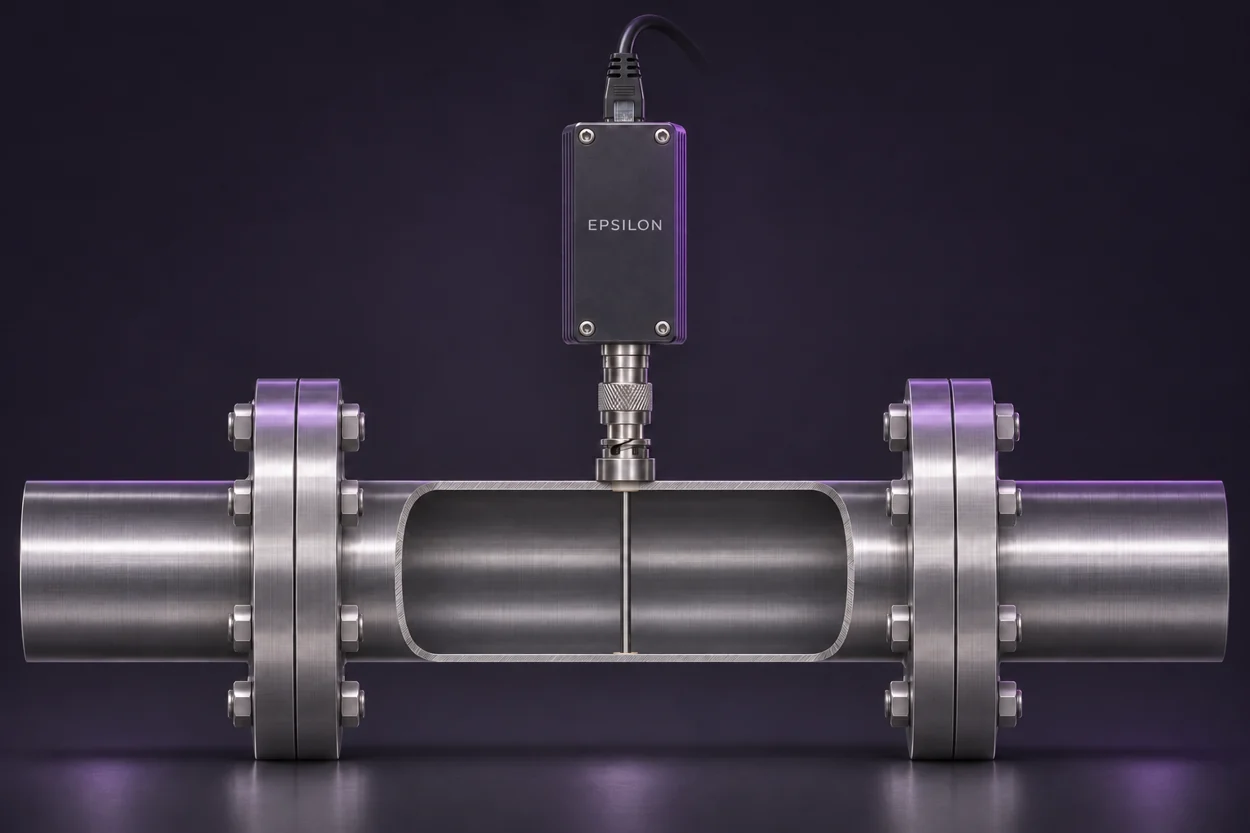
A slender rod spans the bore. Recessed insulating bushes locate both ends and isolate the rod from the spool, which provides the electrical reference.
Design concept. The pressure and temperature rating depends on the specified body, seals and electrical feedthroughs.
See how EIT maps conductivity, infrared absorption measures gases and ultrasound detects suspended particles or deposits.
Explore the three technologies